Heiser Spring Restoration
Project Status: Complete 2010
Heiser Spring, historically one of only three perennial sources of surface water in Wupatki National Monument, has been the focus of restoration from 2002 to 2010. Its long history of human use includes nearby archaeological stone structures and associated artifacts from the 12th and 13th centures A.D., use as a livestock watering ground in the 18th and 19th centuries, development to supply Depression Era labor camps, and finally, providing a water supply for nearby NPS structures and dwellings by the 1960s.
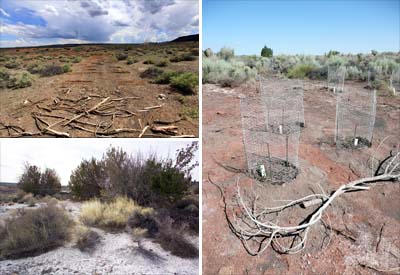
The severely impacted condition of the spring, coupled with phasing out of NPS operations at the spring area, set the stage for the 2002 General Management Plan proposal to restore the spring to its natural condition. Restoration focused on removing remaining structures, eradicating non-native plants in the spring area, restoring native riparian vegetation, and re-establishing natural terrain contours and drainage patterns. While surface water is not expected to return until the water table rises, Heiser Spring is now protected within the Resource Preservation Zone in Wupatki National Monument, which restricts general public access and further supports the success of restoration efforts.
Project Contact(s):