Grand Canyon NP Bryophyte Floristics & Ecology
Project Status: Completed
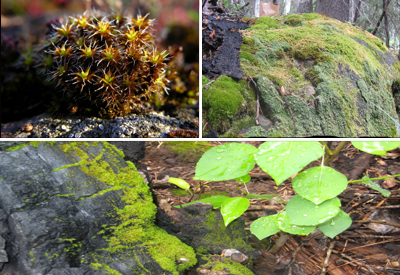
Bryophytes are small, herbaceous plants that grow closely packed together in mats or cushions on rocks, soil, or as epiphytes on the trunks and leaves of forest trees. They include mosses, liverworts and hornworts, and are found throughout the world in a variety of habitats. Despite their low profile, bryophytes are important contributors to biological diversity and many ecosystem functions.
Grand Canyon National Park (GRCA) provides an opportunity to improve our understanding of bryophyte diversity and ecology in the southwestern United States because its mile-high elevation gradient encompasses a large proportion of the environmental variation present in the region.
The goals of this project were:
1. Expand the known bryoflora of Grand Canyon by collecting bryophytes from a variety of biotic communities within six defined geographic regions in Grand Canyon National Park, and by incorporating bryophyte collections made in the park since the 1940s.
2. Study the ecology of rock bryophyte communities along trail corridors throughout the pinyon-juniper, ponderosa pine, and mixed conifer forests of Grand Canyon National Park.
Project Products